Interactome
Mapping the molecular universe of human disease through Network Medicine
The Cellular Network
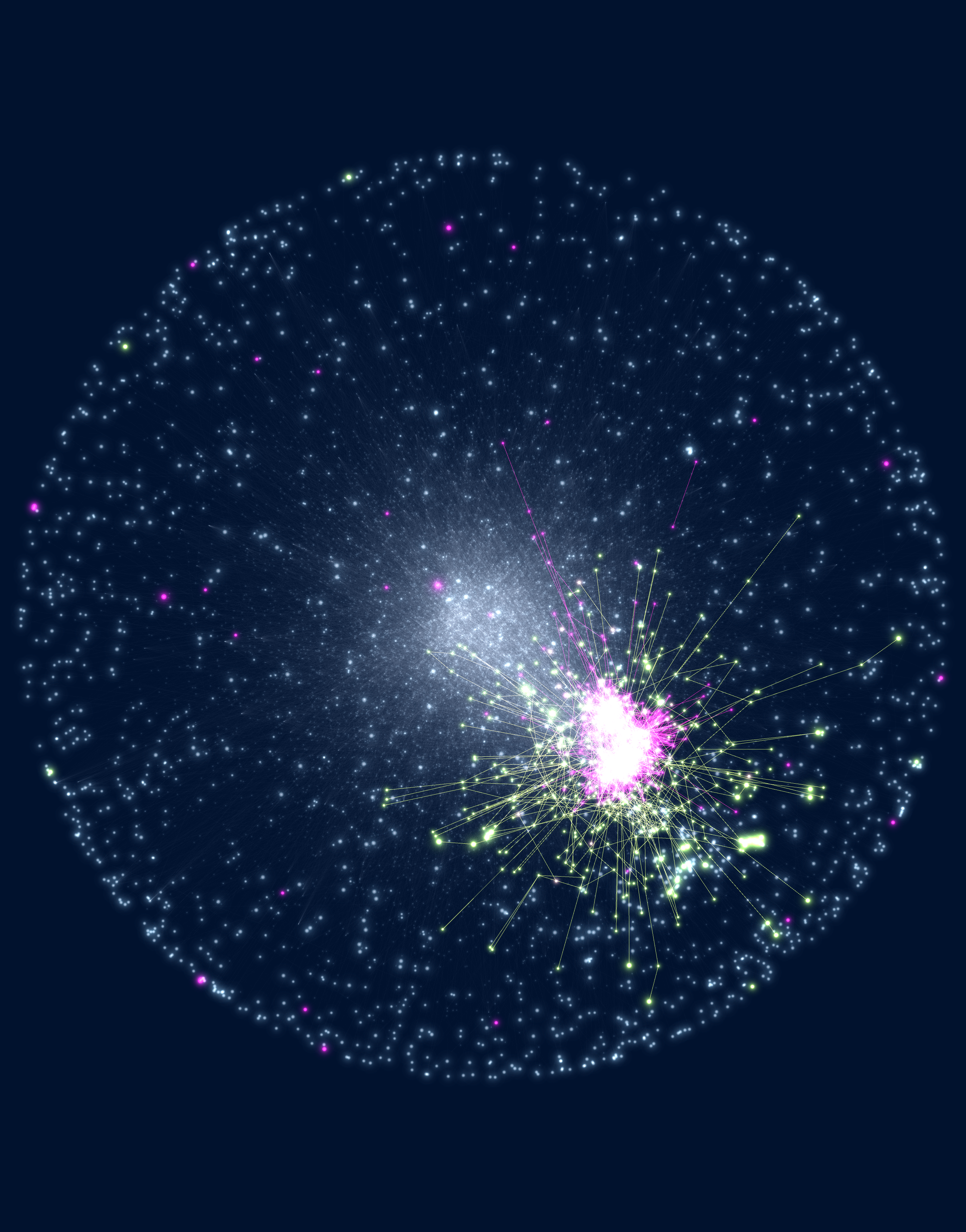
Network-based approaches to human disease have multiple potential biological and clinical applications. The first step in exploring the interplay between networks and human diseases requires comprehensive and accurate molecular and phenotypic networks. The network within our cells elucidates how our genes and molecules interact with each other. But how do we connect this stunning map of our inner cellular interconnectedness to human disease?
The Asthma Module
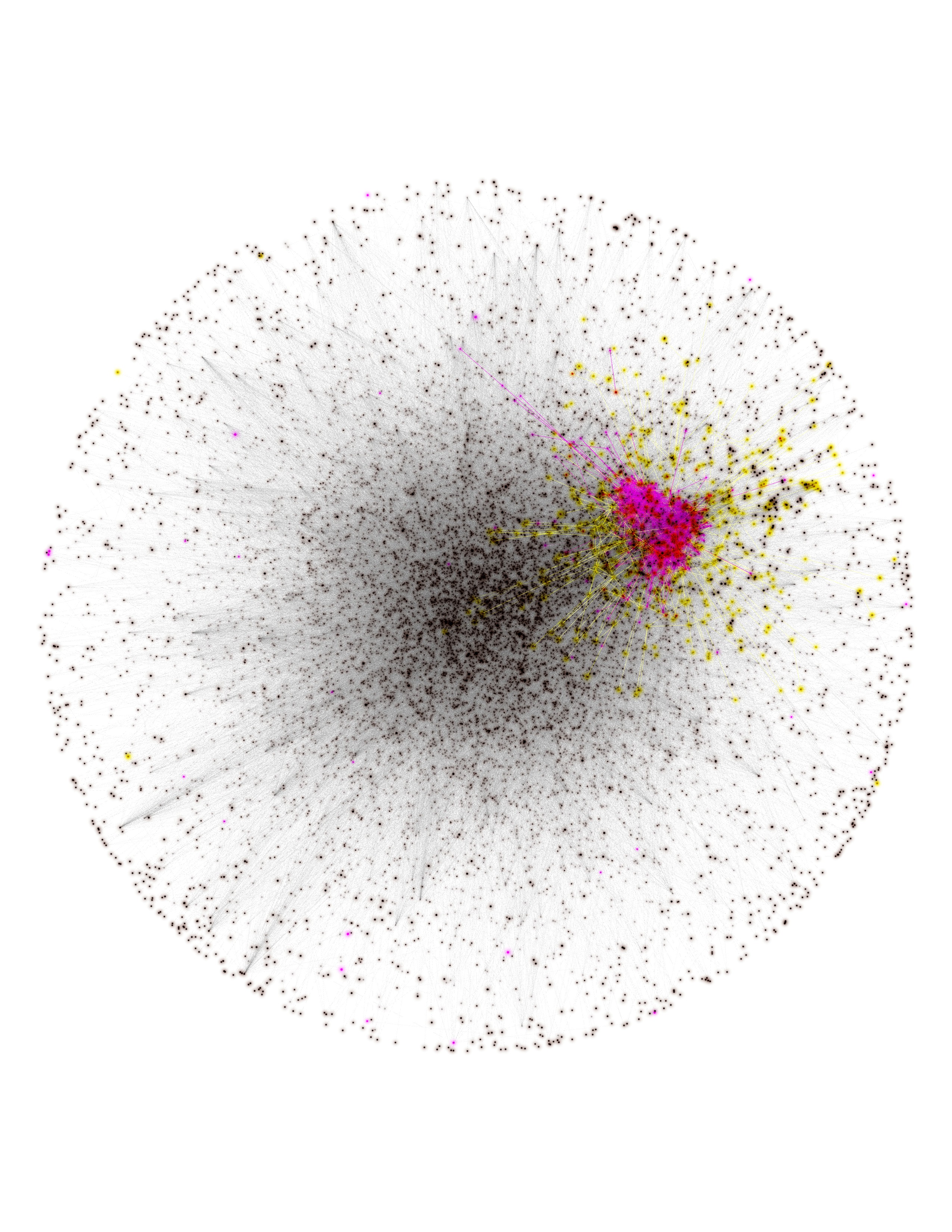
To see how the network map relates to disease, we start with Asthma, the most common chronic respiratory disease, affecting 17 million U.S. children and adults. During the last decades, geneticists and biologists have identified the genes associated with Asthma. The purple nodes represent asthma genes on the network map. We expect them to be together, forming a compact asthma module. In reality, they are scattered all over the map, disconnected. But we are not only missing links; we are also missing many asthma genes. Network science helps us identify candidate disease genes, those that could hold the module together.
Reconstructing Disease Modules
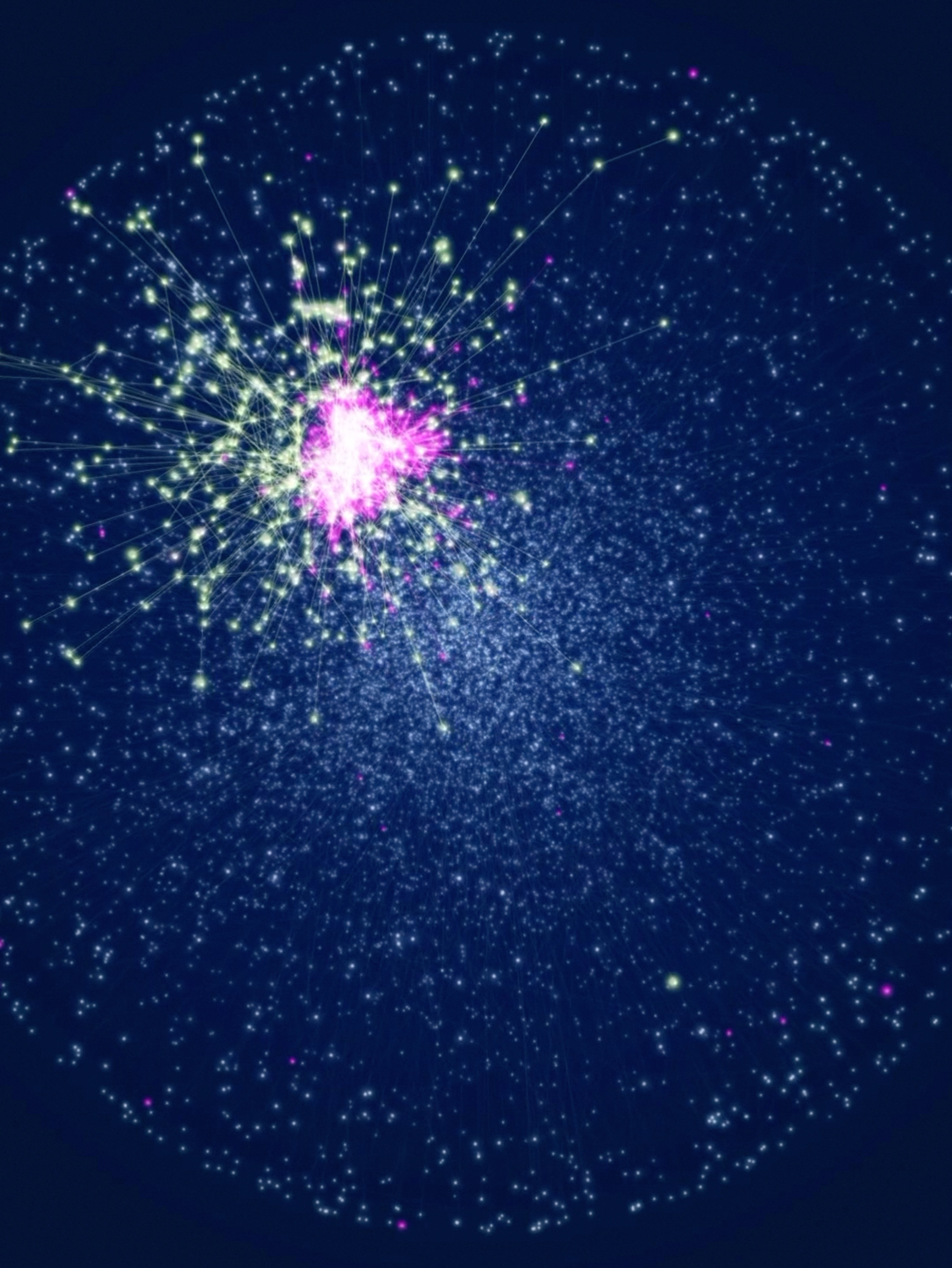
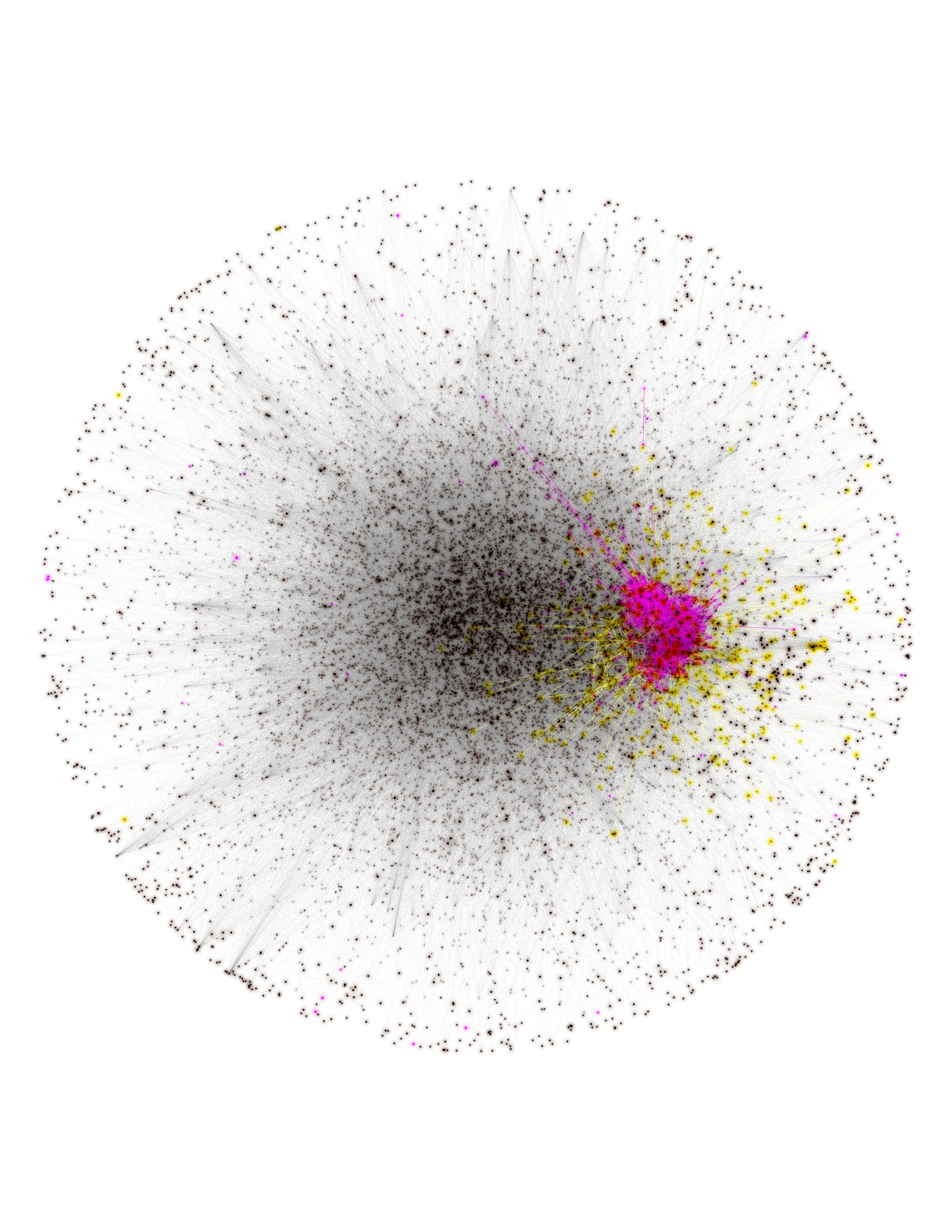
We exploited the collective intelligence of the network to identify the Asthma module. You can see the outcome of this: the Asthma module being reconstructed in front of our eyes. Now that we have the disease module, we can use it to identify the disease mechanism and to find drug targets and eventually better drugs against asthma.
Disease Relationships
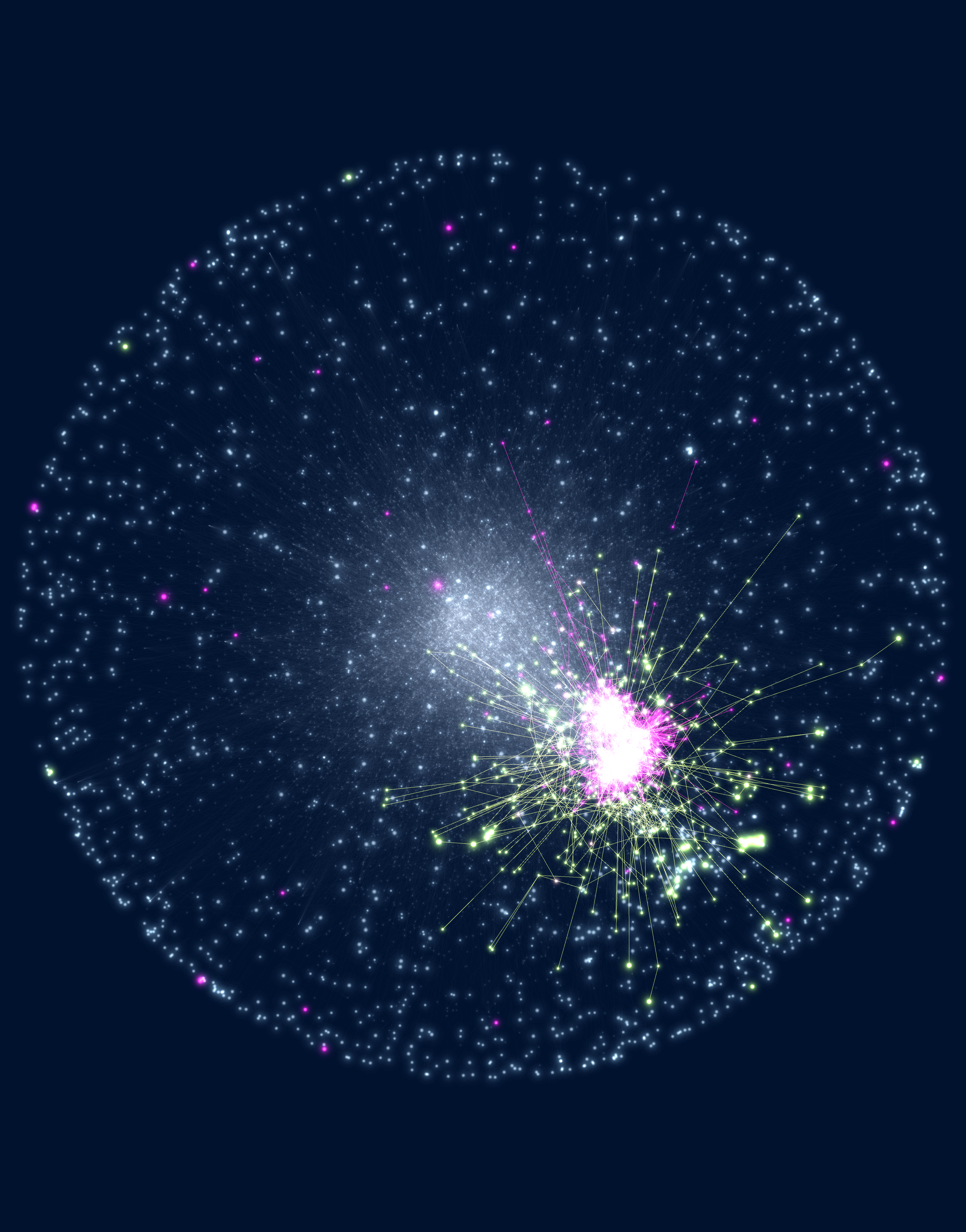
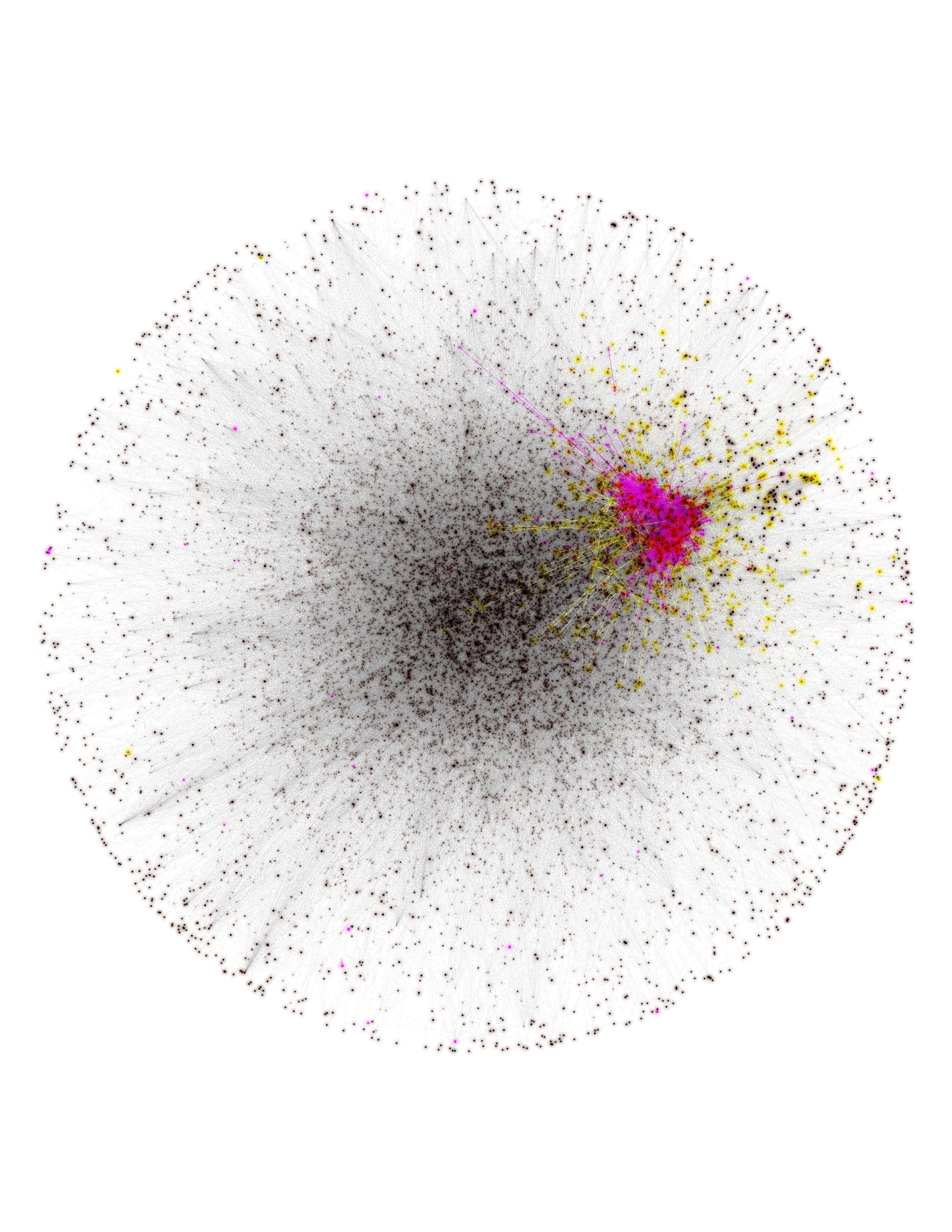
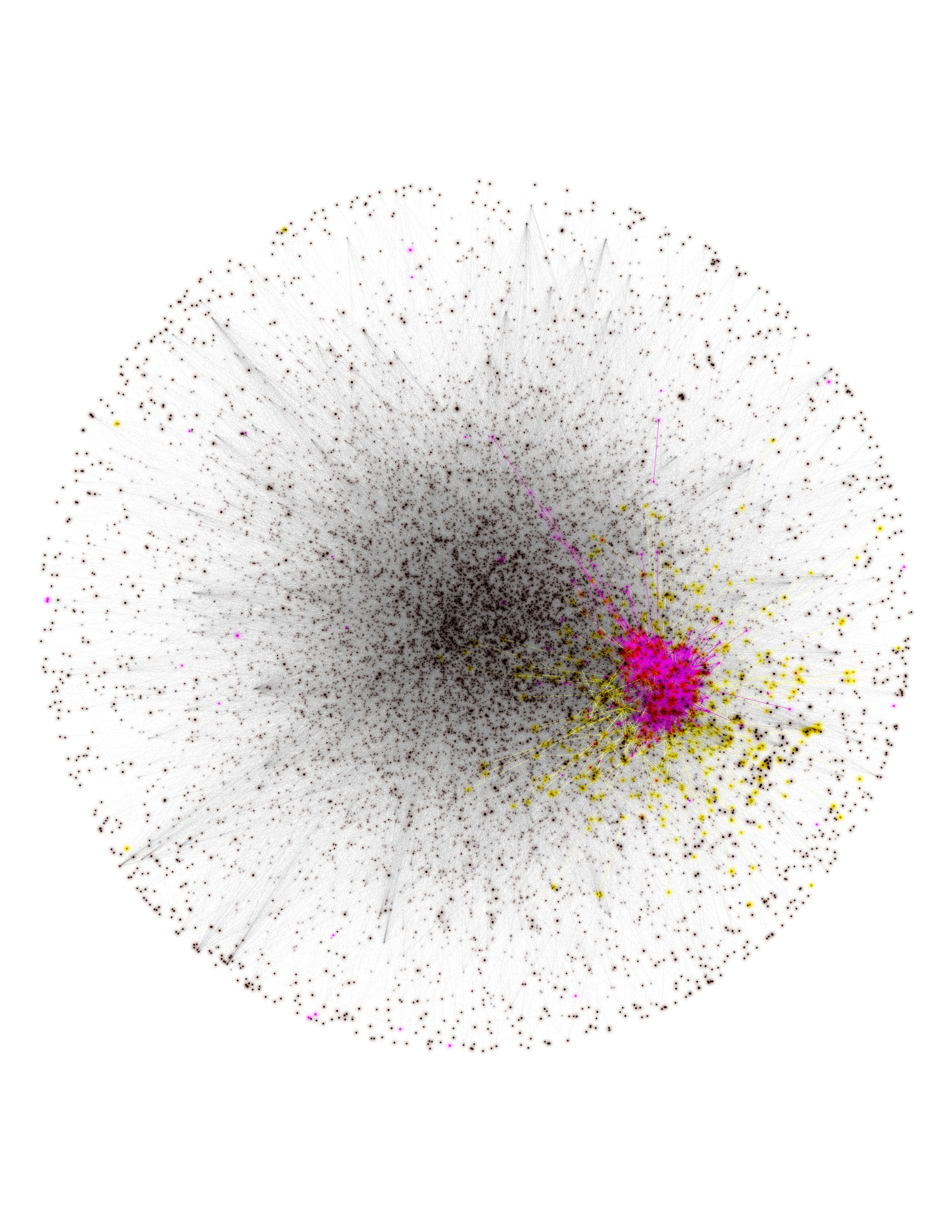
We used the same tools to identify the disease module of COPD (Chronic Obstructive Pulmonary Disease), shown with yellow on the map. COPD is a lung disease like Asthma, with many overlapping symptoms. Its disease module is in the neighborhood of Asthma. Not only are they in the same neighborhood, but the two modules show considerable overlap. Diseases that have similar symptoms should be located in the same part of the cellular network. By simply looking where various diseases are within this map, we can identify the molecular relationships between them.